
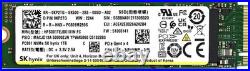

2 2280 NVMe solid-state drive. PCIe Gen4 x4 interface. Designed to deliver premium storage performance for modern PCs, laptops, and workstations that can leverage the higher bandwidth of the PCIe 4.0 bus, and with its 1TB capacity it balances ample storage with very strong speed metrics that, on paper, put it in the same performance class as many enthusiast-oriented SSDs available today, supporting sequential read speeds of up to around. 7000 megabytes per second (MB/s). And sequential write speeds as high as. Thanks to a combination of SK hynix’s own. 176-layer TLC NAND flash. As well as an aggressive pseudo-SLC cache that maximizes burst performance and helps sustain high throughput under heavy workloads; this makes the drive well-suited for tasks like large file transfers, game installs, video editing, and other data-intensive workflows where read/write throughput and low latency matter, and random input/output operations per second (IOPS) ratings up to approximately. 1,500K for reads and 1,400K for writes. Reflect its strong responsiveness in mixed workload scenarios typical of everyday use and multitasking, while the inclusion of a. Onboard further smooths performance by avoiding reliance on host memory buffer modes that can bottleneck sustained operations, and though precise endurance figures for the 1TB model vary slightly with firmware and specific NAND bins, the combination of 4D V7 NAND and a robust controller gives it competitive durability and longevity compared with many other drives in its class, typically with multi-hundreds of terabytes written (TBW) of total write endurance and years of service life under typical consumer workloads; the PC801’s architecture is also optimized to be power efficient relative to older PCIe 3.0 drives, meaning that despite its blistering speeds the drive keeps power draw reasonable and heat manageable, a practical consideration for laptop users and compact desktops where thermals can influence throttling and sustained performance, although in extremely heavy and prolonged transfers without airflow or heatsink assistance it may be subject to thermal throttling like many high-speed Gen4 SSDs, so some builders choose to pair it with a motherboard heatsink to maintain peak performance under extended load. In terms of real-world performance beyond official rated speeds, user and benchmark data suggest the drive holds its own against well-known competitors, delivering fast load times in games, rapid application launches, and responsive file operations; while synthetic benchmarks show strong throughput figures, actual performance depends on host platform support for PCIe 4.0, system configuration, and firmware maturity, and insufficient system support (for example PCIe 3.0 slots) can limit the drive’s advantages, cutting maximum achievable bandwidth roughly in half compared to native Gen4 support. Please note this listing does not include the original packaging for this item, no original packaging is included. Item shown in the listing may be different. The PC801 is broadly compatible with modern operating systems that support NVMe drives, and its M. From a technical perspective, the PC801 series marks SK hynix’s move to leverage in-house NAND and controller technologies for client SSDs targeting mainstream and high-performance segments, bringing the benefits of the company’s advanced NAND manufacturing to end users seeking PCIe 4.0 performance without the premium price tag of flagship enthusiast SSDs, and as such it’s often chosen by builders and upgraders who want solid performance for gaming rigs, content creation machines, and general productivity systems alike. In practice, the drive’s large SLC cache and DRAM buffer help it sustain high speeds over a wide range of file sizes and transfer conditions, making it not just an excellent choice for peak performance numbers but also for everyday use where responsiveness and quick access to data are noticeable, although real-world gains over other good PCIe 4.0 drives may be less dramatic than the headline numbers suggest for typical desktop tasks that don’t saturate the interface; nevertheless, for users whose workloads. Benefit from high sustained throughput – such as transferring large video files, working with large databases, or loading massive game textures – the PC801 delivers performance that keeps up with modern demands. Finally, while some user-reported notes on community forums mention quirks like occasional firmware behavior or security feature support nuance, those tend to be edge cases depending on specific systems and drive firmware versions, and the overarching consensus remains that the PC801 is a fast, capable, and versatile SSD choice that brings the advantages of PCIe 4.0 NVMe storage to a wide audience at an attractive value point, making it a strong contender in the 1TB NVMe SSD landscape.